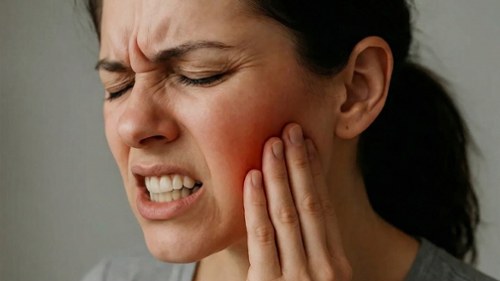
Waking up with a sore jaw? Let’s talk about grinding.
Most people don't realize they are grinding their teeth until a partner complains about the noise, or a tooth cracks or a piece breaks off.
In dentistry, we call it Bruxism. It’s defined most simply as the excessive clenching or grinding of teeth that isn't part of normal chewing. While it might seem like a harmless habit, the forces involved are significant. It’s not a healthy action for your mouth, and over time, it can cause permanent damage to your teeth and your jaw joints.
When we eat, there is actually a protective mechanism in place. Your brain limits how hard you bite so you don't accidentally bite through your tongue. But when you clench or grind, that safety mechanism turns off. Your jaw muscles are capable of exerting massive amounts of force against themselves. This is far more than they ever use for chewing dinner.
Here at Providence Dental Care in West Lakes, we often see patients who are doing this during the day when they are thinking, frustrated or stressed, or more commonly, at night when they have no conscious control over it.
The machinery behind the grind
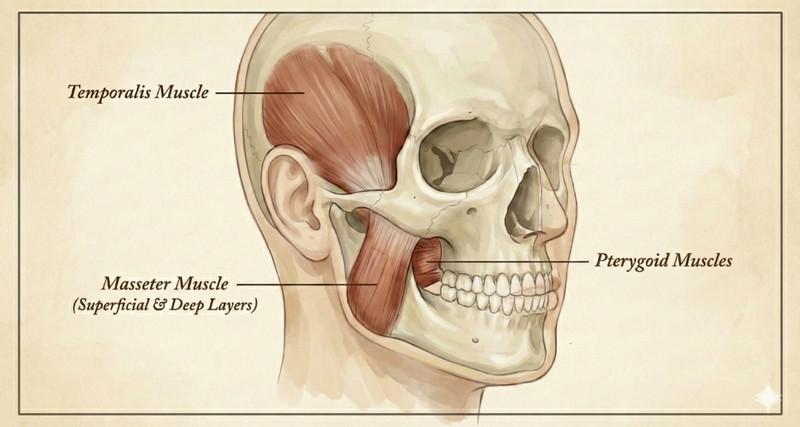
To understand why your jaw hurts or your teeth look worn, you have to look at the muscles involved. It’s not only your teeth grinding. It is a whole system working overtime.
There are muscle groups we look at specifically:
* The Temporalis and Masseter muscles, which are the powerhouses that bring your jaws together.
* The Pterygoid muscles (medial and lateral), which are responsible for moving the jaw side to side.
When these big muscles are working overtime, many smaller accessory muscles get strained as well. They can create the headache, sore neck and tension all through the muscles of your head.
Why do I clench or grind?
We are still studying exactly why some people grind and others don't. In my experience, it’s rarely just one thing. It is usually a combination of physical and psychological factors.
For adults, anxiety, tension, and psychological stress are huge contributors. If you’re under pressure at work or at home, your jaw often takes the brunt of it while you sleep. Interestingly, studies have also shown that night bruxism is a sleep disorder and can be related to sleep apnoea.
From a physical standpoint, teeth alignment issues called malocclusion can sometimes trigger the behaviour. We also look for enlarged tonsils or adenoids particularly in children, or issues regarding airway restriction. Being overweight and particularly if the weight is carried around the neck can play a role.
The damage isn't just cosmetic
The signs of bruxism vary wildly depending on how hard and how often you are grinding. Some people clench tightly and get terrible tension headaches but have teeth that look perfect. Others might have mild grinding with worn surfaces but no pain at all, so they don't even realize they have a problem.
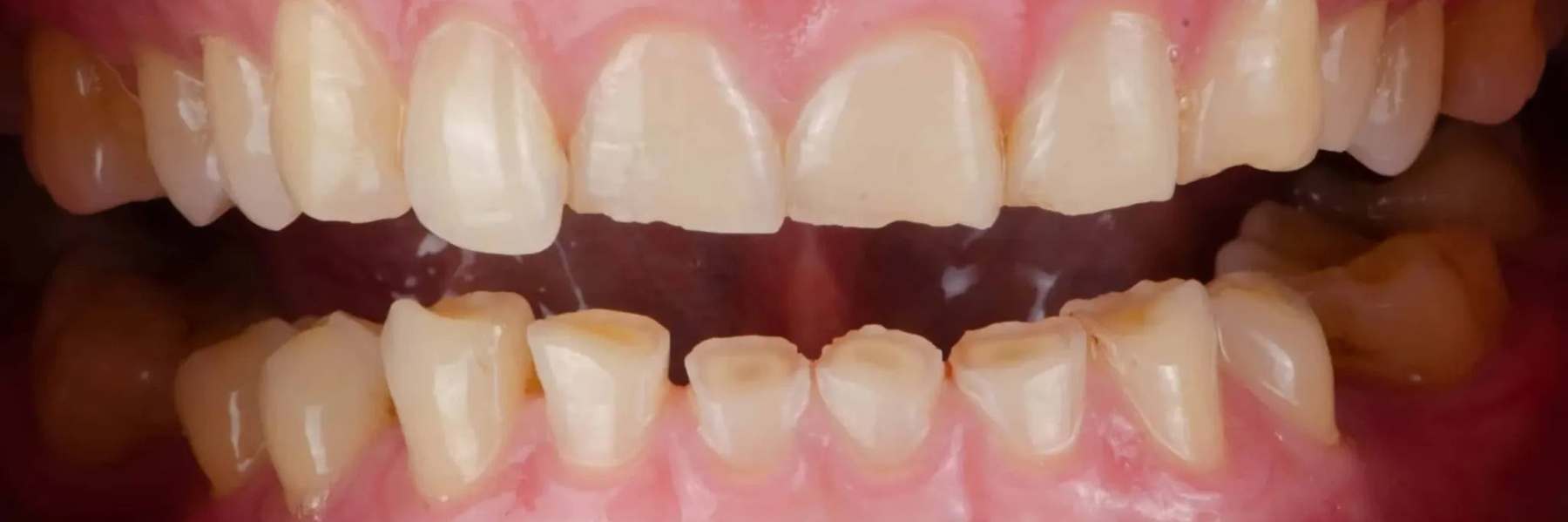
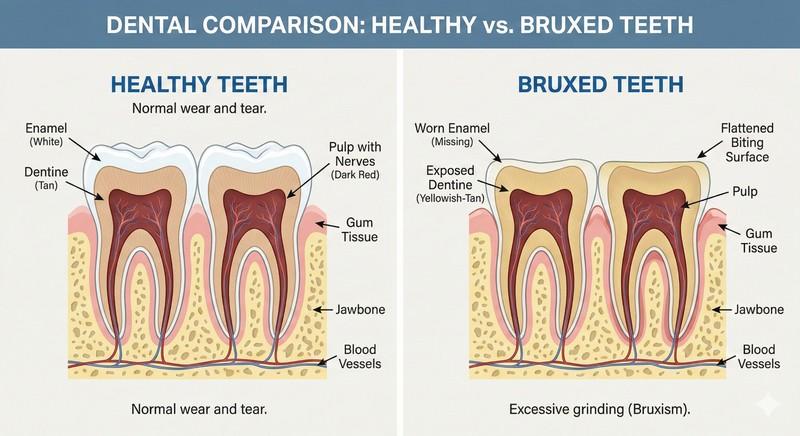
However, for those with severe grinding, the damage is often visible and painful. A clearly visible sign you can see in the mirror is flattened off front teeth that are reducing in height over time. This is a big concern if you are under 30 years old and already have this.
Once the white enamel has been worn through, and now the softer inner yellow dentine is exposed, the problems start to accelerate because the dentine is much softer and susceptible to decay, acid erosion and more rapid wear.
We also see a lot of structural failure. This includes acid eroded teeth, loose teeth, and fractures starting to spread like spiders webs through the enamel of the teeth.
It affects the joint, too
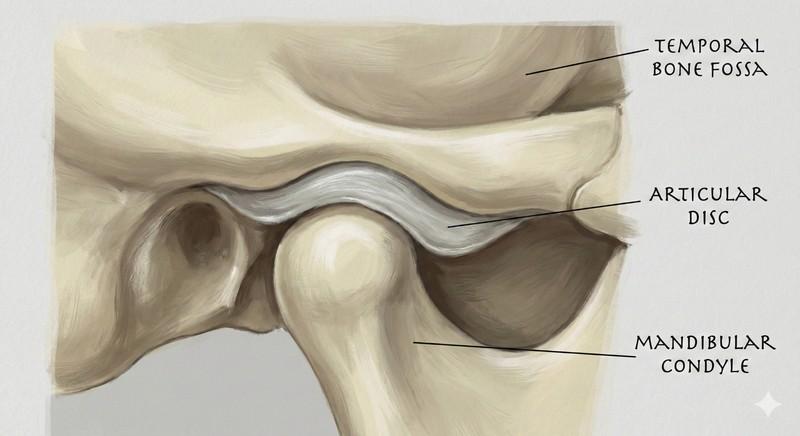
It’s not just the teeth that suffer. The Temporomandibular Joint (TMJ), which is your jaw joint, can take a beating.
Intense muscle contraction can lead to stiffness, pain, and restricted opening, making it difficult to chew. In some cases, the joint suffers damage that is very slow to heal and sometimes requires significant surgery to correct. If you are noticing clicking, earaches, or limited movement, that’s a sign the joint is under stress.
What can we do to help?
If the cause is psychological or stress-related, or due to structural problems within the jaws themselves, we can guide you towards the professional healthcare services that can help get those issues under control.
However, we know that removing stress isn't always practical. You can't just stop working or stop being busy with the kids. So we look at treatments to help mitigate the damage and the symptoms.
Night Guards (Splints)
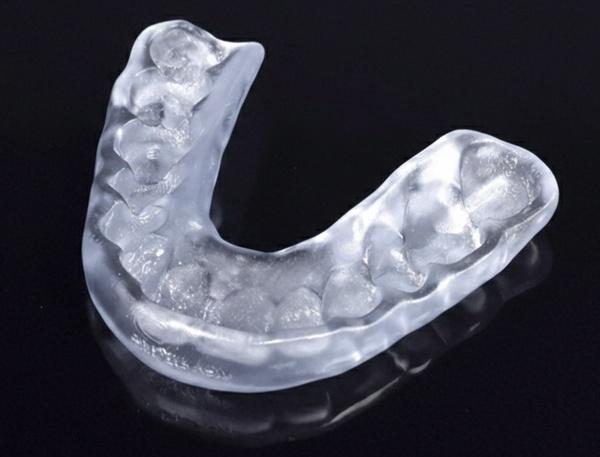
The most common starting point is a custom-made night guard, or "splint." This fits over your top teeth and you wear it while you sleep.
It does two things. Firstly, it physically protects the teeth and positions your jaw correctly to minimize damage to the joints. Secondly, it plays a little trick on your brain. By changing the biting surface, it signals your nervous system to reduce the amount of force the muscles are putting down while you sleep.
Muscle Relaxant Injections
Another option that provides significant relief for many patients is the use of botulinum toxin (often known as Botox or similar brands).
We inject a very small amount into the masseter and temporalis muscles to reduce the intensity of the contraction. It’s particularly helpful for people who clench during the day, as the treatment works 24 hours a day, 7 days a week.
I want to be upfront about the limitations here. The biggest drawback is that the effects typically wear off after 4 to 6 months, and health funds generally do not contribute towards the cost.
That said, many patients find the relief is worth it. Because it only takes a few minutes, we can easily top it up during your routine 6-month check-up. While a night guard should last you for years if well maintained, injections are an ongoing maintenance choice. But for many, the comfort they bring is invaluable.
Next Steps to improve teeth grinding in West Lakes
If you’re local to West Lakes or the surrounding suburbs and you’re concerned about the wear on your teeth or jaw pain, give us a call or book online. We’ll take the time to check your bite, look at the wear patterns, and give you an honest assessment of what’s going on.
This is not an exhaustive list of everything bruxism related as it's an enormous topic with lots of research, but I hope that it has given some information on the issue to create a better understanding.