As dentists, our goal is usually to keep your natural teeth in the mouth.
In the past, if a tooth caused trouble, the solution was simple. We took it out. These days, modern dentistry is built around the idea that saving a natural tooth is nearly always the best option for your long-term health and function.
However, there are specific times when holding onto a tooth does more harm than good.
At Providence Dental Care here in West Lakes, we make the decision to extract only after we have looked at the clinical situation and evaluated the pros and cons.
Why we might recommend extraction
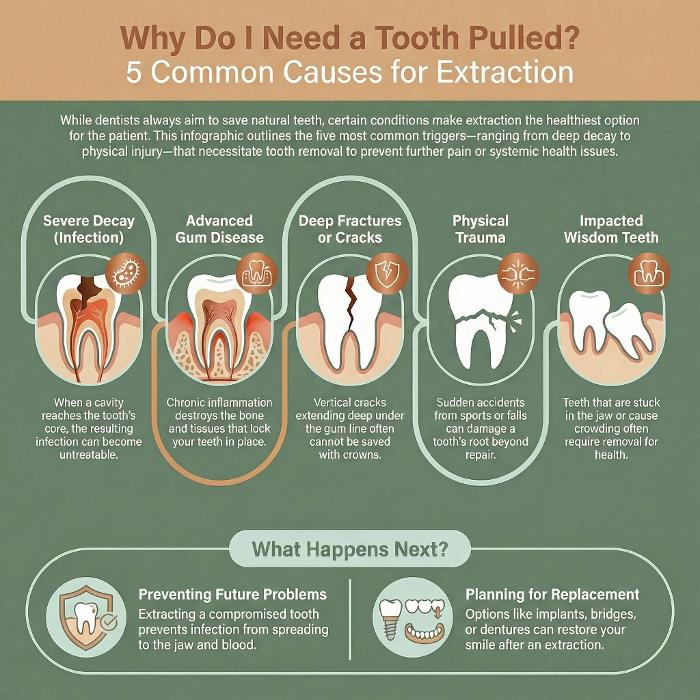
We generally look at extraction as a specific solution to a specific problem.
- Extensive damage: If a tooth is badly decayed or damaged due to trauma, there may not be enough structure left to repair.
- Severe periodontal disease: This is an infection of the gums and bone. Plaque and tartar (calculus) over time destroy the bone holding the tooth in place. If the tooth becomes loose, we often cannot save it from needing to come out.
- Cracks: A tooth root may crack or split completely. We cannot repair this, and leaving it in place leads to infection.
- Health complications: Badly infected teeth can lead to abscesses that spread infection through the bloodstream. Sometimes we have to remove the source of the infection to protect your general health. Needing heart surgery, joint replacements, or starting on certain medications are some common reasons.
The cost of extraction
We believe in being upfront about fees.
The cost for an extraction typically falls between $250 and $500 per tooth. This range depends on the difficulty of the procedure and the time we anticipate it will take to complete safely.
We will let you know the exact cost beforehand. We provide a clear, written treatment plan with item codes so you know where you stand before we begin.
The importance of the X-ray
We never extract without having an idea of what to expect so before we start, we always need to take an X-ray of the tooth.
This X-ray is necessary to confirm our diagnosis and it allows us to assess the difficulty of the extraction and check for any rare or unusual anatomy we cannot see with the naked eye. We use this information to plan the safest way to remove the tooth, ensuring that the healing process is as smooth as possible, and minimising risks of complications.
The process
We work hard to differentiate ourselves by booking appointments that are the right length to ensure you’re comfortable and have as good of an experience as possible.
- The Setup: Once you are in the chair, we can put on music you like or you can watch the TV installed on the ceiling to give you a distraction.
- The Anaesthetic: We use strong anaesthetics to numb the area completely. We always wait and check that you are fully numb before we start.
- The Feeling: You will feel lots of pressure, but you should not feel sharpness. If you feel anything sharp, just tell me. We can give more anaesthetic easily to ensure you are comfortable- There shouldn't be a need to experience pain.
- The Removal: We start gently pushing on the tooth with our instruments to get it ‘wobbly’. Once the tooth is loose, we take it out with tools that let us grab a hold of it.
- The Cleanup: We make sure the socket is clean and flush out any infection with saline. We also ensure the blood clot has set itself in the socket before you leave.
Anxiety and Sedation
If you are nervous, you are not alone. Many people find dental visits stressful, so we have methods of making it easier for our patients.
We can offer conscious sedation using nitrous oxide (happy gas) to manage anxiety. For some patients, this really helps the procedure to be much more relaxed. For patients who are genuinely phobic, we can discuss twilight sedation or general anaesthetic, the vast majority of patients do not require these for routine extractions.
What happens to the space left behind?
When you lose a tooth, the nearby teeth often drift or tilt into the empty space. This creates food traps, increases decay risk, and can negatively impact your bite over time.
The best thing is to have a plan for that gap before the tooth comes out.
If we plan to replace the tooth with a dental implant later, we need to discuss socket preservation. When a tooth is removed, the jawbone naturally shrinks because it is no longer being stimulated. Socket preservation involves placing a material in the socket at the time of extraction to ensure the bone heals with enough volume to support an implant in the future.
Recovery and Aftercare
Recovery is usually straightforward if you follow a few rules.
- Bite on gauze: We will have you bite on a cotton pack for an hour to stop the bleeding and help the blood clot form in the socket.
- Don't disturb the clot: The blood clot is nature's method of healing. Do not rinse your mouth vigorously, do not smoke, and do not drink through a straw for at least 24 hours. The suction can dislodge the clot and cause a very painful condition called dry socket.
- Pain relief: We will give you specific advice on pain relief medication.
- Contact us: We tell our patients that they can email or call us directly if they are having any concerns.
We provide much more specific explanations and instructions in person; this blog post is just to give you a brief understanding of extractions. If you have a tooth that is worrying you, or you want a second opinion on an extraction, please book online or give us a call. We are happy to talk it through and give you more specific information for your exact case.